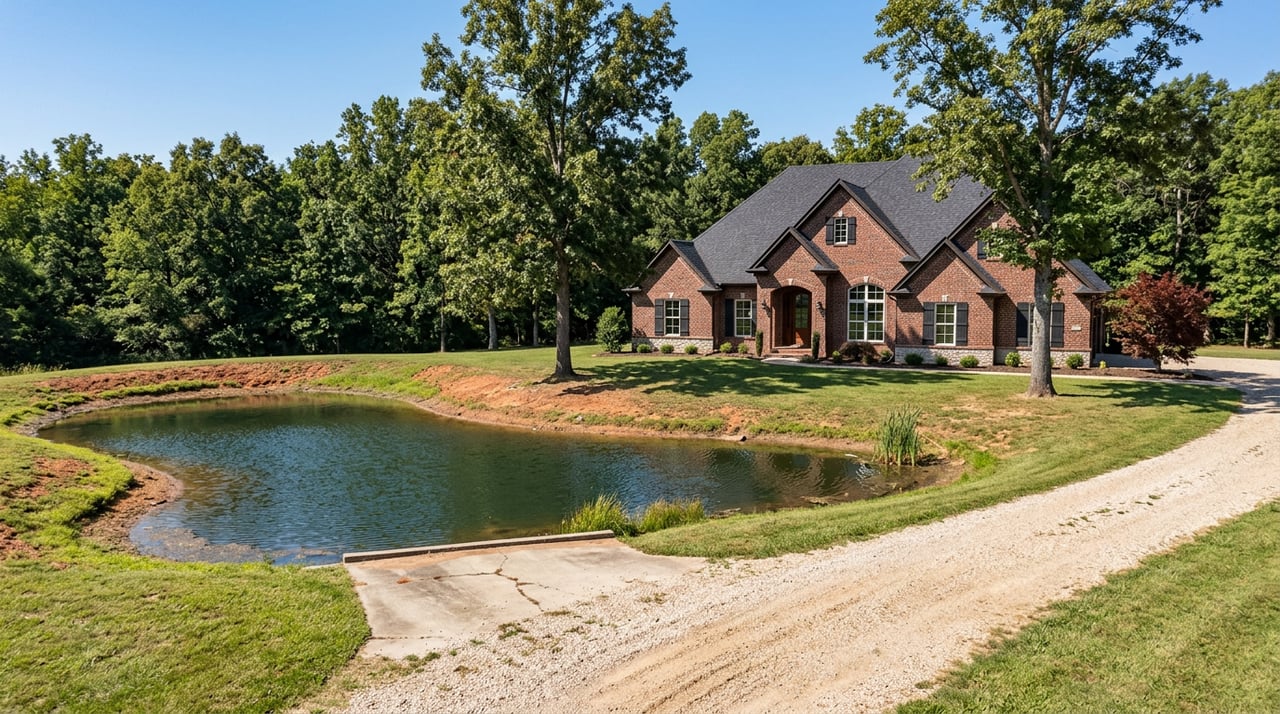
Thinking about trading subdivision streets for sunrise views and room to roam? Buying acreage near Ozark can be a smart move, but it is not the same as buying a house on a city lot. You will check different boxes, work with different pros, and write different contingencies. This guide walks you through the essentials for Ozark and greater Christian County so you can search with confidence, avoid costly surprises, and make a strong offer when the right tract appears. Let’s dive in.
What makes acreage different
- Legal access and easements matter more. Many rural parcels rely on recorded easements or private drives instead of city streets. You need recorded, insurable access for financing and future resale.
- Utilities are not guaranteed. City water and sewer taper off outside Ozark. Expect private well and septic in unincorporated areas, and confirm service early with the City of Ozark Water Department if you think city utilities might be available.
- Soils, slopes, karst, and floodplain drive buildability. The Ozarks include karst terrain, which can affect septic feasibility and groundwater protection. Missouri DNR explains regional karst considerations on its page about karst and springs.
- Financing and timelines differ. Raw or lightly improved land often requires larger down payments and shorter terms. If you plan bona fide agricultural operations, USDA FSA programs may help. See this overview for new producers from farmers.gov.
Start with location and zoning
City or county jurisdiction
First, learn whether the parcel sits inside the City of Ozark or in unincorporated Christian County. City parcels follow municipal zoning and utility rules. County parcels follow Christian County’s Unified Development Code. Start with the county’s Planning & Development office to confirm jurisdiction and next steps.
Read the district rules
If the parcel is in the county, review the written standards for its zoning district. Many rural tracts fall under agricultural or agricultural-residence districts that shape uses, accessory buildings, and setback rules. Read the current Christian County Zoning Regulations to understand what is permitted outright and what may need a conditional use.
Verify access and road permits
Prove legal access
Do not assume the driveway means you have legal access. Confirm public road frontage or a recorded easement that reaches the tract. If neighbors’ land is involved, review the recorded easement for width, location, and maintenance language. Lack of recorded access can derail loans and insurance.
Driveway and road standards
If you plan to add or relocate an entrance, check county rules before you grade. The county’s Road and Access Standards outline when a driveway permit is required and when higher standards apply for shared private roads. Review the Road and Access Standards so your plans match local requirements.
Confirm utilities and services
Water and sewer
Inside city limits or near existing lines, you may be able to tie into municipal water or sewer. Confirm service area, connection fees, and any outside-city surcharges with the City of Ozark Water Department. Outside city systems, plan on a private well and an on-site wastewater system.
Power and gas
Service territories in Christian County are split among providers, including a cooperative in rural areas and investor-owned utilities elsewhere. Ask the seller and the county which utility serves the parcel, then call the provider to discuss line extension costs, transformer placement, and timing.
Internet and cell
Coverage changes quickly. Check carriers and local ISPs for fiber, cable, or fixed wireless options at the address, and verify typical speeds with neighbors when possible.
Wells and water testing
If a well already serves the property, ask for the well log, recent water test results, and any maintenance records. Plan to test for bacteria and nitrate during inspections. Missouri DNR’s Well Installation Section maintains searchable well records and contractor information. Start with the DNR page for wells, drilling, and records to pull logs and verify contractors.
If there is no well, use nearby well logs to estimate depth and yield before you commit. Local drillers can discuss siting, typical depths in the immediate area, and timelines to drill.
Septic and on-site wastewater
Christian County requires a site evaluation and a permit for on-site wastewater systems. For existing systems, request the original permit, operating history, and a current inspection. For new systems, budget for soil evaluation, design, and permitting. The county health department provides details on permits and inspections for wastewater and septic.
Soils, slopes, karst, and floodplain
Soils and topography affect foundations, drainage, and septic design. Screen parcels with soils data, then rely on a licensed evaluator for site-level tests that size the system correctly. The Ozarks include karst features like sinkholes and springs, which increase the need to protect well heads and may limit where you place a house, pond, or septic. See Missouri DNR’s overview of karst and springs for background.
Before you assume a building site is safe from flooding, check FEMA Flood Insurance Rate Maps and county floodplain data. Work in mapped areas can require permits. The county’s Environmental office explains local rules for stormwater, erosion, and floodplain permits. Visit the Environmental Division to understand requirements.
Surveys, title, easements, and minerals
Always order a current boundary survey for acreage. Fences wander, old markers disappear, and a fresh survey can save you from encroachments. Your title company should search for recorded easements, covenants, liens, and any mineral reservations. The Christian County Recorder of Deeds maintains the public index for all recorded instruments. Learn how to search deeds and plats through the Recorder of Deeds.
Financing and contract basics
Lenders view raw land, improved lots, and agricultural properties differently. Expect higher down payments and shorter terms for raw land. If you plan a qualifying commercial farm, the USDA Farm Service Agency offers ownership and operating loans that can help new producers get started. Read this Q&A for beginning farmers on farmers.gov.
Protect yourself with land-specific contingencies. At minimum, build in time for:
- Legal access verification and review of recorded easements.
- Septic inspection or a new site evaluation and permit approval.
- Well log review and water-quality testing, or confirmation that a new well is feasible.
- Satisfactory boundary survey.
- Clear title with title insurance, including checks for mineral rights.
- Utility confirmation and approvals for any driveway or road permits.
When to walk away
- No recorded, insurable access to a public road and no practical way to secure it.
- Failing or unpermittable septic with no feasible alternative design on the site.
- High flood risk or floodway limitations that prevent your intended use.
- Karst features or soils that make your building plan or pond placement unrealistic based on professional evaluations.
Who to hire and why
- Land-savvy real estate agent. You want someone who knows rural due diligence, local agencies, and how to write land-specific contingencies.
- Title company with rural experience. Easements, split estates, and old covenants are common on acreage.
- Surveyor. A current boundary survey helps you avoid encroachments and place improvements confidently.
- Septic and well pros. Licensed evaluators and drillers provide the tests, permits, and realistic budgets you need.
- Optional specialists. If timber value, habitat, or ponds matter, consider a forester or conservation consultant. For complex easements or minerals, consult a land attorney.
Quick glossary
- Legal access or deeded access. A recorded right to reach the parcel by public frontage or an easement.
- Prescriptive easement. A potential right-of-way created by long-standing use. It is fact-specific and not guaranteed; rely on recorded access when possible.
- Well log. A record of a well’s construction, depth, and yield filed with the state.
- Soil/site evaluation or percolation test. Field tests used to design septic systems and confirm feasibility.
- Floodplain vs. floodway. Floodplain is the broader area at risk. Floodway is the channel that must remain open to convey floodwater. Work in a floodway faces strict limits.
- Severed mineral rights. When a prior owner kept or sold minerals separately from the surface. Title work can reveal these split estates.
Next steps
If you want space for a home, shop, or small-scale farm near Ozark, a little homework goes a long way. Start with jurisdiction and zoning, prove legal access, and confirm utilities, wells, septic, soils, and floodplain before you write an offer. Then line up a survey, a solid title search, and the right contingencies so you can buy with confidence.
Ready for tailored guidance on a specific tract or to set up a land-focused search? Reach out to Chad Jones for a no-pressure, local consultation on buying acreage in Christian County.
FAQs
How do I confirm legal access on rural land near Ozark?
- Check the deed and recorded documents for public road frontage or a recorded easement, and have your title company verify insurable access.
Who handles septic permits in Christian County, MO?
- The Christian County Health Department reviews site conditions, specifies the system type and size, and issues permits; request the existing permit and inspection history.
Where do I find Missouri well logs for a property?
- Missouri DNR’s Well Installation Section maintains searchable well records; pull the well log and schedule water-quality testing during inspections.
Do I really need a new boundary survey before closing on acreage?
- Yes. A current survey helps locate boundaries, avoid encroachments, and is often required by lenders and title companies for land purchases.
Can I keep livestock or build a pond on acreage near Ozark?
- Often yes in agricultural or agricultural-residence districts, but confirm zoning rules for setbacks and accessory uses, and check county environmental and floodplain permits for any pond or major earthwork.